
Yin yoga
A slower practice. Space to soften, notice and return to yourself.
About Yin Yoga
Yin Yoga is a slow, reflective practice that invites you to pause and pay attention to how you feel. Practised mostly seated or lying down, postures are held for several minutes, allowing time to explore sensation, stillness and your natural breath.
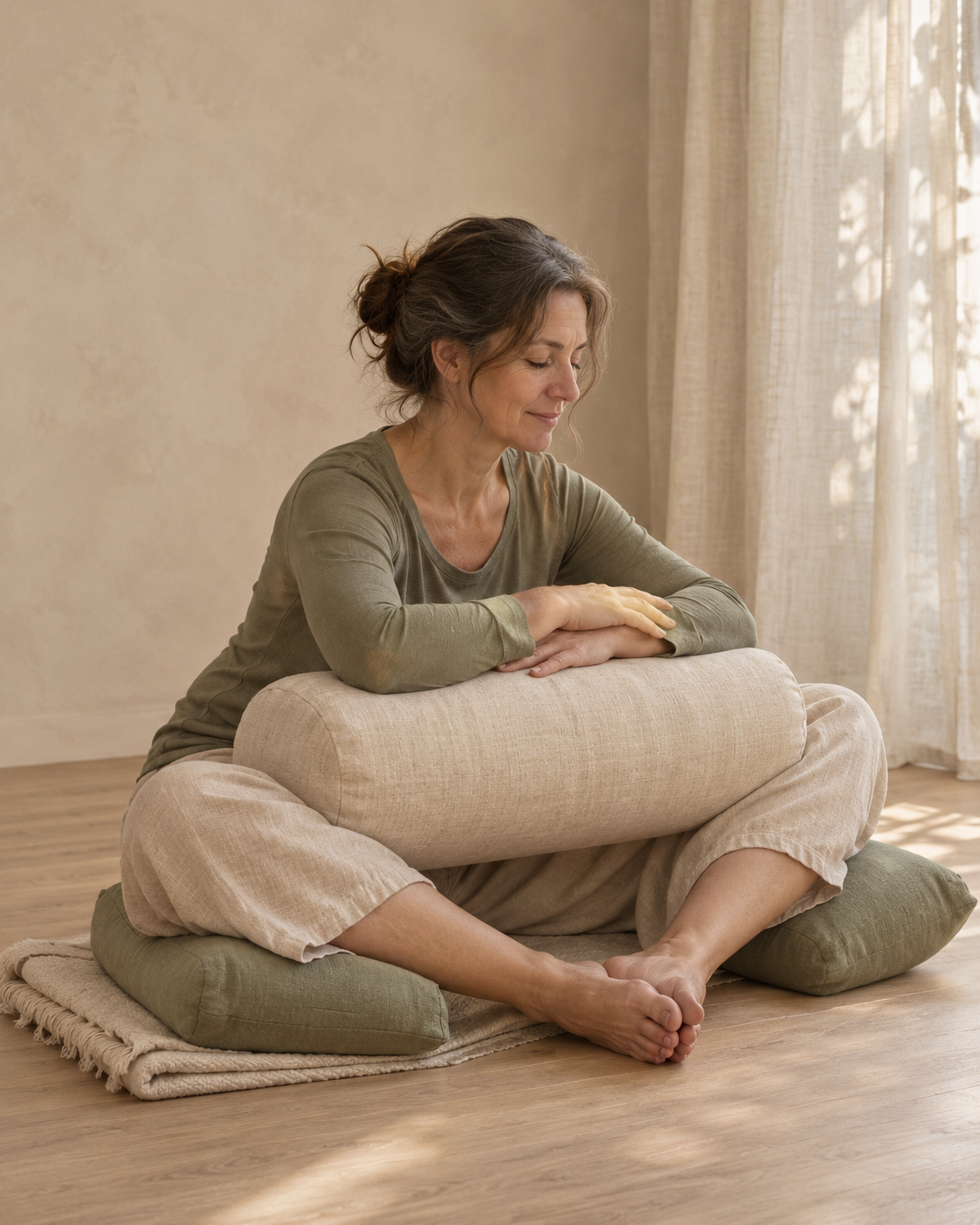
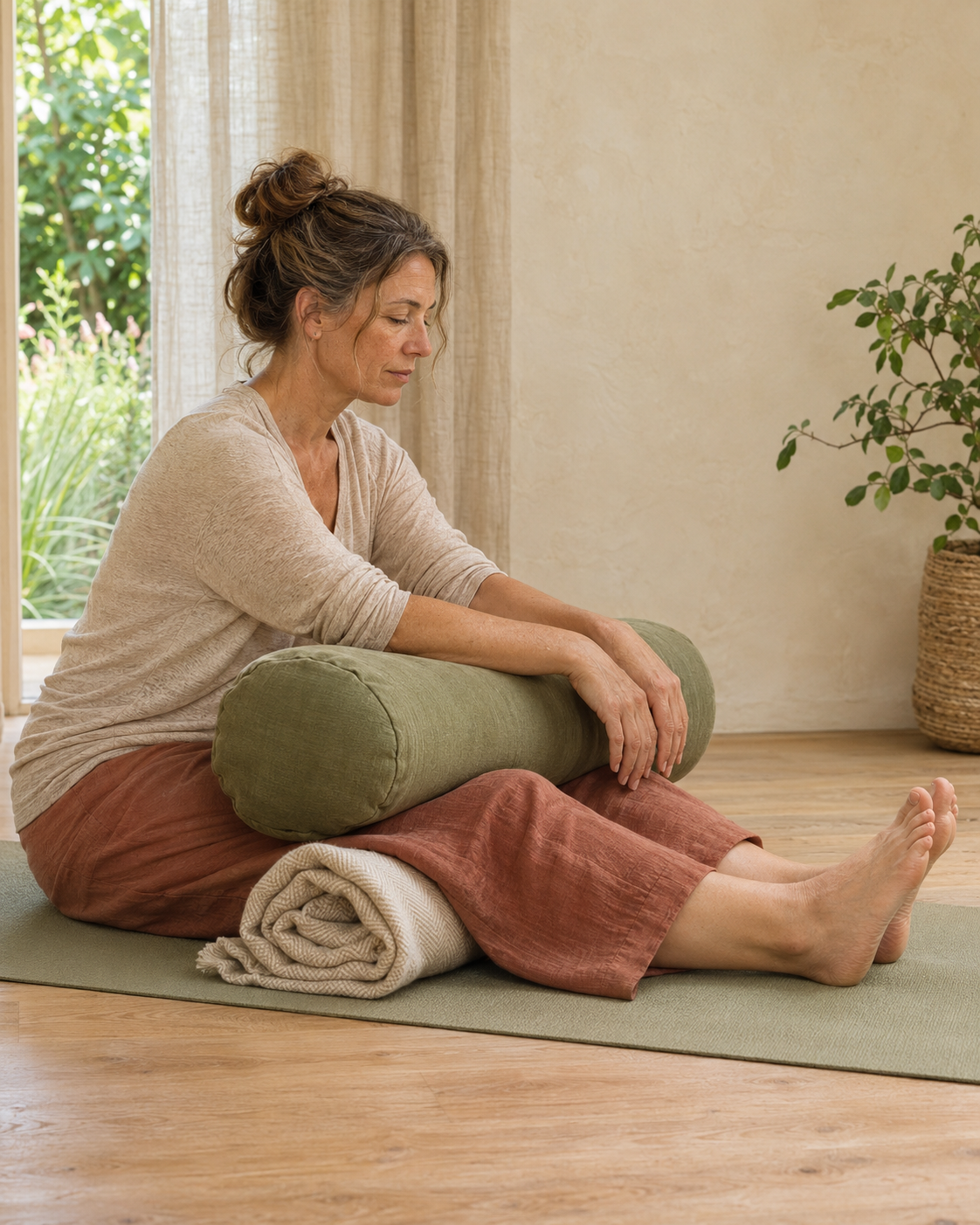
Rather than moving quickly between shapes, you have time to find a position that works for your body. Cushions, blankets, blocks or bolsters can offer support, and each posture can be adjusted to suit you.
At A Quiet Return, my approach is gentle and unhurried. I offer guidance and encouragement to explore within your own comfortable range, with freedom to move, rest or come out of a posture whenever you need.
You don’t need to be flexible or experienced. There is no particular shape to achieve—just an invitation to meet yourself as you are.
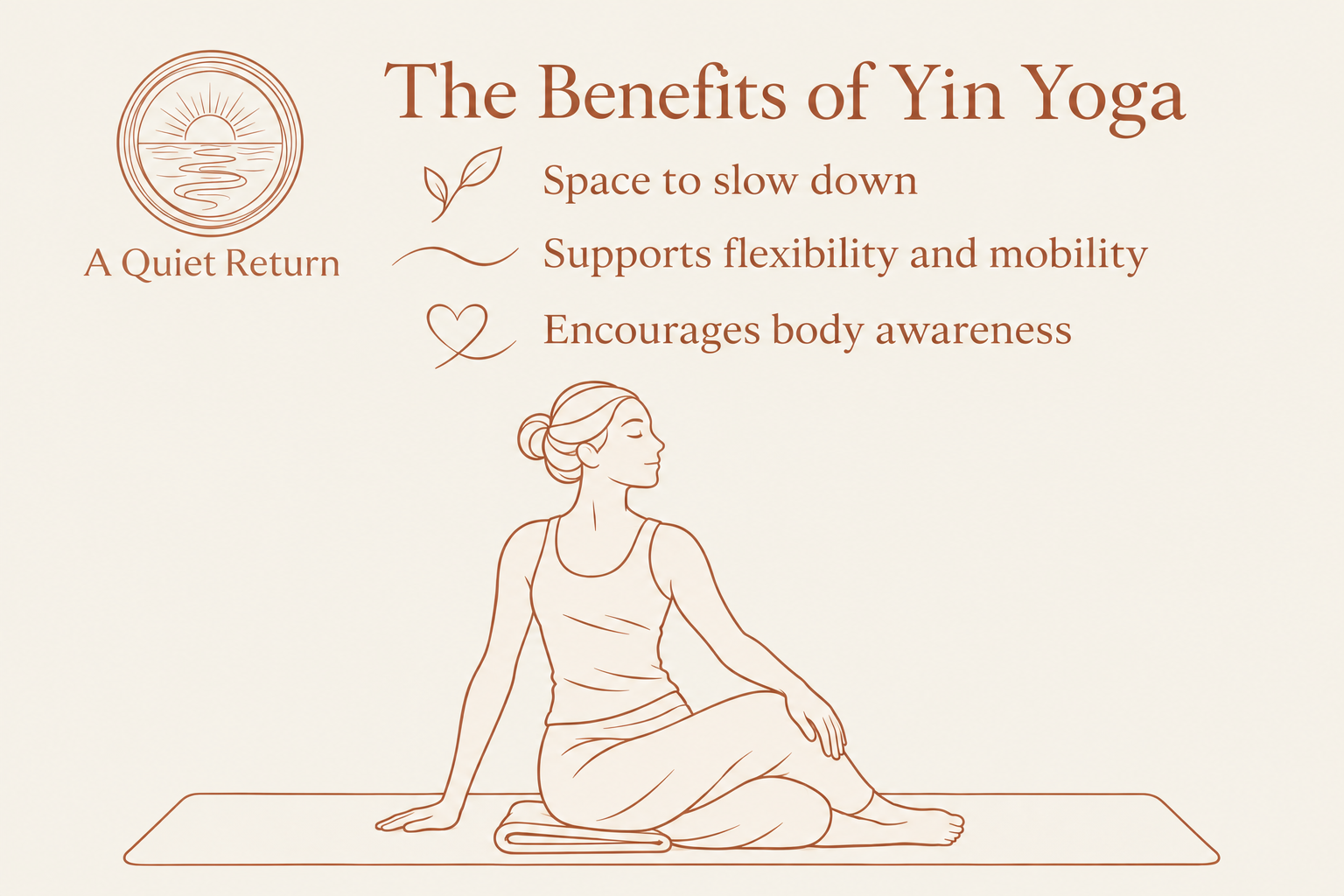
The benefits of Yin Yoga
Yin Yoga can help:
Yin offers time to step away from the demands of everyday life and explore a quieter way of being.
The practice can support:
Flexibility and comfortable movement over time.
Greater awareness of your body and its boundaries.
A mindful pause from busyness and distraction.
Familiarity with noticing sensations without immediately reacting.
A sense of quiet, rest and connection with yourself.
Balance alongside more active forms of exercise.
Every experience is individual. Some days, stillness may feel restful; on others, you may notice a busy mind or find it difficult to settle. There is room for all of that, without needing to make the practice feel a certain way.
Who’s it for?
Yin Yoga may appeal to you if you’re:
Craving a slower pace and time for yourself.
Spending much of your day busy, distracted or constantly “on”.
Curious about yoga but unsure where to begin.
Looking for a quieter companion to walking, running or strength training.
Interested in exploring stillness and body awareness.
Moving through a period of change and wanting a regular space to pause.
You are welcome whether you are new to yoga or have an established practice. Your body’s proportions, range of movement and experience are your own, and your practice can reflect that.
If you have an injury, a health condition or any concerns about taking part, please get in touch so we can discuss whether the session is appropriate for you.
Frequently Asked Questions
Make space for a quieter moment
You don’t have to wait until you feel flexible, calm or ready. If you are curious about Yin Yoga, I would love to hear from you.
Together, we can explore whether the practice feels right for you.Still have questions? Take a look at the FAQ or reach out anytime. If you’re feeling ready, go ahead and apply.
-
Yin Yoga is a slower form of yoga in which postures are held for longer than in many flowing classes. Most are practised seated or lying down.
The practice combines physical sensation with mindful attention. You explore an appropriate amount of stretch or pressure, allow time in the posture and notice your experience as it changes.
-
Postures are often held for around three to five minutes, although timings vary with the posture, the session and your needs.
You do not have to stay for the full time. You can adjust your position or come out earlier, and there is time to move slowly between shapes.
-
No. You do not need to touch your toes or have any previous yoga experience.
The aim is to find a version of each posture that suits your body. Support and adjustments can help you explore without trying to copy someone else’s shape.
-
You may notice a mild to moderate stretching sensation, gentle pressure or differences between the two sides of your body. You may also become more aware of your thoughts, emotions or natural breathing.
Stillness can feel peaceful, but it can also feel unfamiliar. You are welcome to change position, keep your eyes open or take a break.
Sharp, pinching, burning or electrical sensations, numbness and joint pain are reasons to ease out of a posture and let me know. You never need to push through pain.
-
They share a slower pace and may both use props, but their intentions differ.
Restorative yoga generally uses support to minimise effort and encourage rest. Yin usually involves a noticeable, manageable sensation in a longer-held posture, alongside mindful attention.
Yin can feel restful, but it is not always physically effortless.
-
Yin Yoga can be adapted for many people, but longer-held stretches are not appropriate for every body or every circumstance.
Please tell me beforehand if you are pregnant, have recently had surgery, have an injury, hypermobility, osteoporosis or another condition that may affect your practice. We can discuss adaptations and whether advice from your healthcare professional would be helpful.
Being very flexible does not mean going further into a posture is beneficial. Finding an appropriate range matters more than depth.
-
Wear comfortable clothing that allows you to move freely. Layers and warm socks can be useful, as a slower practice may leave you feeling cooler.
Avoid a large meal immediately beforehand, and let me know about any injuries, health concerns or support you may need before we begin.
-
Awareness of your natural breath can be part of Yin Yoga, but this is different from a dedicated Conscious Connected Breathwork session.
There is no need to force, deepen or change your breathing. You can simply notice it as it is.
-
Item description